
Free Shipping on Lower 48 Orders $99+
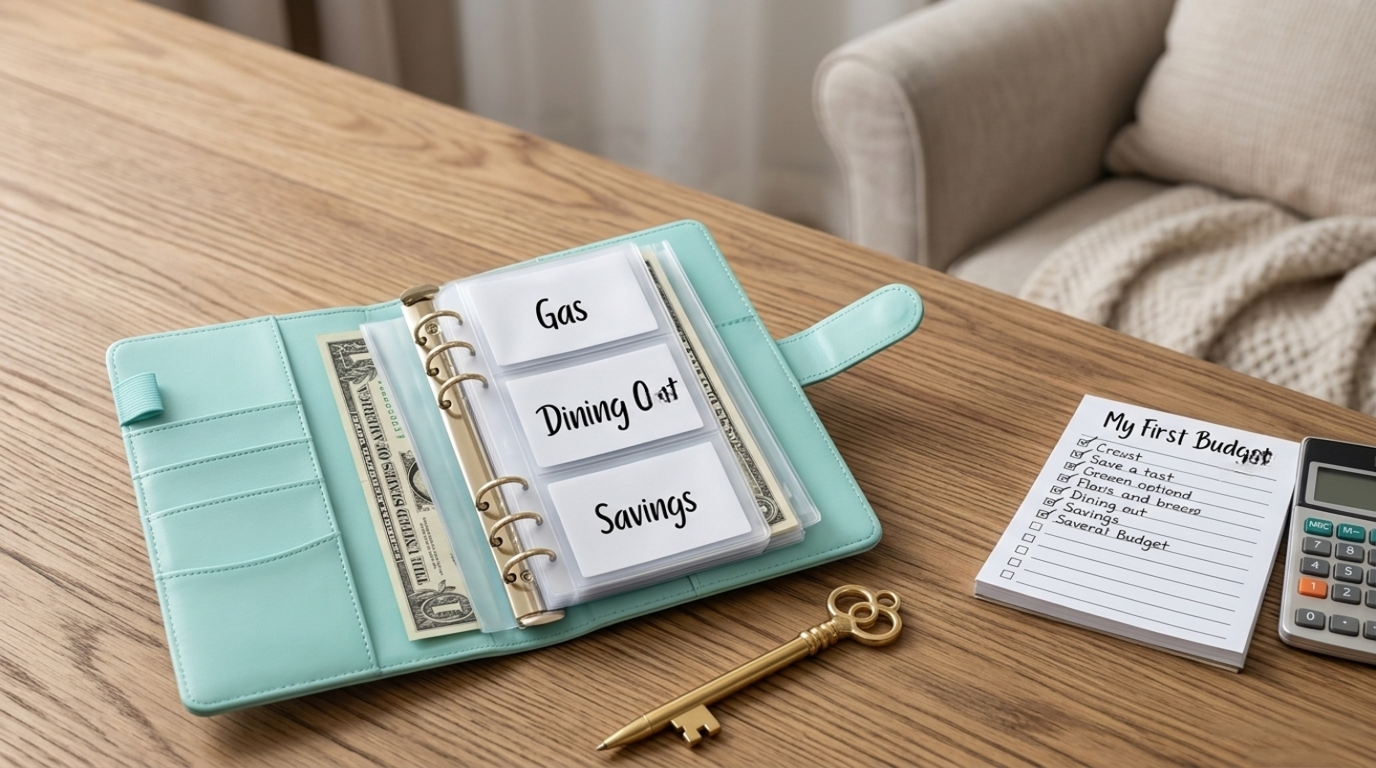
Cash stuffing has taken over budgeting communities online and for good reason. It’s one of the most effective, visual, and genuinely satisfying ways to manage your money. If you’ve been curious about cash stuffing but don’t know where to start, this guide is for you.
We’ll walk through exactly what cash stuffing is, why it works, and how to set up your first budget binder with cash envelopes from scratch.
Cash stuffing is a budgeting method where you divide your physical cash into labeled envelopes for different spending categories. Instead of paying for everything with a card and tracking it digitally, you withdraw your budget for each category in cash and “stuff” it into the corresponding envelope.
When you go to buy groceries, you pull from the Groceries envelope. When you fill up your gas tank, you pull from the Gas envelope. When the envelope is empty, that category is done for the month.
It sounds simple and it is. That simplicity is exactly why it works.
The reason cash stuffing is particularly effective for beginners comes down to psychology. Research consistently shows that people spend less with physical cash than with cards because the pain of paying is more real when you can see and feel your money leaving.
When you tap a card or click checkout, the transaction is abstract. When you pull $40 from an envelope and hand it over, you feel it. That feeling creates awareness, and awareness is the foundation of any working budget.
To get started with the cash envelope budgeting system, you need three things:
Your binder holds all of your envelopes in one organized, portable system. We recommend starting with an A6 budget binder — it’s compact enough to carry in a purse or bag but spacious enough for all your categories.
One Cash Stuffing Envelope per spending category. You’ll label each envelope with a spending category name. Standard beginner categories include: Groceries, Gas, Dining Out, Entertainment, Personal Care, Clothing, Savings, and Emergency Fund.
A simple tracker sheet lets you log what goes into each envelope and what comes out. This gives you a monthly picture of where your money is actually going.
Start with 5–8 categories. Don’t overcomplicate it. Common beginner categories: Groceries, Gas, Eating Out, Entertainment, Personal Care, Savings, Miscellaneous.
Look at your last 2–3 months of bank statements and calculate your average spending in each category. This becomes your starting budget for each envelope.
Insert your envelopes into your A6 budget binder. Label each envelope with its category. If your binder includes dividers, group similar categories together (spending categories vs. savings categories).
On payday, go to the bank or ATM and withdraw the cash for all your budget categories combined. Then stuff each envelope with the correct amount.
For the rest of the pay period, use cash from the appropriate envelope for every purchase in that category. Leave your card at home if you need to.
Your first month won’t be perfect and that’s fine. Review what ran out early and what had money left over, then adjust next month’s allocations accordingly.
Once you’re comfortable with basic cash stuffing, the next step is setting up sinking funds. Sinking funds are savings categories for planned future expenses that don’t happen every month — like car maintenance, holidays, back-to-school shopping, or a vacation.
Instead of scrambling when these expenses arrive, you save a small amount into a sinking fund envelope each month. When the expense comes due, the money is already there.
Our Large Budget Binder Bundle includes dedicated sinking fund dividers to help you set up this system from day one.
Keep it to 5–8 categories to start. Too many envelopes becomes overwhelming and hard to manage.
Life is unpredictable. Always include a small Miscellaneous or Buffer envelope for unexpected small purchases.
Your first month of cash stuffing will teach you more than any blog post. Expect to adjust and refine. The system gets easier and more intuitive every month.
At Bound By Elizabeth, every budget binder with cash envelopes is handcrafted in Surprise, Arizona. Whether you want a starter binder, a complete bundle with tracker sheets, or a fully personalized cash stuffing system we have what you need to start your budgeting journey today.
Browse our Budget Binders with Cash Envelopes collection and take your first step toward financial freedom.